Can You Wear Jewelry Through TSA? (2026 Guide)

Airport security just ate your favorite ring.
You packed carefully, got to the gate with time to spare, then spent four minutes at the bin tray trying to pull rings off your fingers while a line formed behind you. Nobody told you which ones to remove, which ones were fine, or why the rules seem to change by airport.
This article answers the core question directly: can you wear jewelry through TSA? Then it covers which metals trigger alarms, how to travel smart with a stacking set, and what to do if you're flying internationally with fine jewelry.
The short answer on jewelry and TSA scanners
Most jewelry passes through TSA without issue.
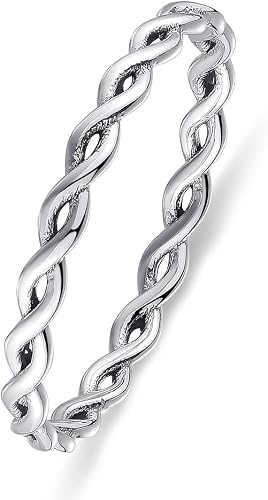
The walk-through metal detectors and millimeter-wave body scanners used at U.S. checkpoints are calibrated to flag dense, bulky metal objects, not thin bands or lightweight chains. A set of slim gold-tone stacking rings, like the kind built for everyday layering, will almost never trigger an alarm on their own.
That said, "almost never" isn't "never."
Here's the interesting part: the threshold isn't about the metal type. It's about mass and density. A single large belt buckle sets off more alarms than a full hand of minimalist bands. TSA officers are trained to evaluate the image, not the material.
What actually gets flagged:
- Chunky cocktail rings with wide metal shanks
- Multiple stacked bangles or cuffs
- Large pendant necklaces with heavy hardware
- Body jewelry with thick gauge metal
What almost never gets flagged:
- Thin stacking bands (under 3mm wide)
- Delicate chain necklaces
- Small stud earrings
- Fine gold or silver rings worn flat on the finger
If you're traveling with a minimalist stacking set, you're in the lowest-risk category. Five thin bands sit well below the density threshold that triggers secondary screening.
Gold-tone vs. solid gold: does the metal type matter?
For airport scanners, no. The detector doesn't distinguish between gold-filled, gold-plated, or solid gold. It reads mass.
For your peace of mind, yes. Here's why this matters when you're packing.
Gold-tone rings (brass or copper base with gold plating) are lighter than solid gold equivalents. That lighter weight means less metal mass per ring, which means even less scanner sensitivity. A set of five delicate gold-tone bands registers as almost nothing on a millimeter-wave scanner.
Solid 14k or 18k gold rings are denser. A single thick solid-gold statement ring might edge closer to the detection threshold than five thin plated bands. If you're curious about how the metals themselves differ, the gold types explained guide covers the alloy breakdowns in detail.
The catch: none of this means you should leave expensive fine jewelry loose in a bin tray. Even when jewelry doesn't trigger an alarm, a tray that goes into the X-ray conveyor and gets separated from you is a theft risk. More on that below.
What TSA actually recommends
The official TSA guidance says you can wear jewelry through the checkpoint. There is no rule requiring you to remove rings, necklaces, or bracelets before screening.
Officers have discretion. If the scanner produces an alert in a specific zone of your body, they may ask you to remove items in that area for a secondary scan. This is rare with fine jewelry. It's common with heavy accessories.
TSA PreCheck changes the experience, though not because the alarm is set differently. PreCheck lanes typically route you through a walk-through metal detector rather than the millimeter-wave body scanner, and you keep your shoes, belt and light jacket on. Fewer items coming off means fewer trays and less chance of losing track of something.
How to travel smart with a stacking ring set
Even when your rings won't trigger an alarm, you still need a system. Here's what works.
Keep thin bands on your finger. A set of five minimalist bands worn together is safer on your hand than loose in a tray. Rings in trays can slide to the edge, fall through the gaps, or get left behind when the bin moves faster than you do.
Use a ring dish or small zip pouch for anything you remove. If you decide to take rings off, for a massage, a gym session, or a pool, have a dedicated pouch in your carry-on. Not your pocket. Not a side compartment you'll forget. One small pouch, always in the same spot.
Don't put jewelry in the bin tray. This is the single most important rule. The tray goes out of your sight the moment it enters the X-ray tunnel. Put rings and necklaces in your carry-on bag before the bag goes on the belt. Your bag is X-rayed anyway. The jewelry is screened. And it stays with your belongings the entire time.
For expensive pieces, consider TSA PreCheck or CLEAR. Both programs reduce the friction of checkpoint screening. CLEAR uses biometric verification and bypasses the ID check line entirely, getting you to the physical screening faster with less chaos around you.
If you're building a travel-friendly jewelry wardrobe, the ring stacking guide has good notes on which combinations stay secure during long days.
International travel and jewelry
Here's what most guides miss: TSA rules only cover U.S. domestic checkpoints. International airports use different equipment and different thresholds.
In the EU and UK, airport security uses similar millimeter-wave technology. Thin jewelry passes without issue in most cases. Some older airports still run walk-through metal detectors with lower thresholds, which are more sensitive to small metal objects.
Customs is a separate question from security screening. If you're traveling internationally with high-value jewelry (above a certain declared value), some countries require you to list it on your customs declaration. The threshold varies by country. Check the customs authority for your destination before you travel.
For everyday costume and gold-tone stacking rings, customs declarations are rarely relevant. For fine jewelry worth several thousand dollars, document what you are carrying with photos and receipts before you leave.
Rings worth wearing through security
The best travel rings share a few traits. They're thin enough to stay below scanner sensitivity. They're durable enough to handle the friction of daily wear across time zones. And they're designed to layer, so you can mix and match without adding bulk.
Thin gold-tone bands hit all three. They are light enough to disappear through a checkpoint without a second glance, and cheap enough that losing one in a bin tray is annoying rather than devastating, which is not something you can say about a solid gold band.
If you want to compare styles before you commit, the best stackable rings page covers options across different widths and finishes. For anyone curious about how trends in layering have shifted, ring trends is a good starting point.
Frequently asked questions
Q: Will my gold rings set off a metal detector at the airport?
Thin gold rings almost never set off airport metal detectors. The detectors are calibrated for denser, bulkier objects. A set of delicate stacking bands, especially gold-tone or lightweight gold, sits well below the threshold that triggers an alert.
Q: Should I remove my rings before going through TSA?
You don't have to. TSA does not require you to remove rings. If you choose to take them off, put them inside your carry-on bag rather than a bin tray so they stay with your belongings through the X-ray.
Q: Can you wear rings through a millimeter-wave body scanner?
Yes. Millimeter-wave scanners detect anomalies by shape and density, not by triggering a magnetic response. Thin rings don't produce a flagged image. Thick, bulky rings may appear as an anomaly on the scan, which could prompt a pat-down of that hand.
Q: What jewelry should I avoid wearing at airport security?
Avoid heavy bangles stacked on one wrist, chunky metal cuffs, large pendant necklaces with heavy hardware, and wide-shank cocktail rings. These have enough metal mass to produce alerts. If you want style references for statement pieces versus everyday minimalist rings, the statement rings guide covers both ends of the spectrum.
Q: Is it safe to wear expensive jewelry through TSA?
The scanner won't damage it. The risk is loss or theft at the bin tray. Keep expensive jewelry on your body or inside your carry-on bag. Never leave it loose in a tray.